
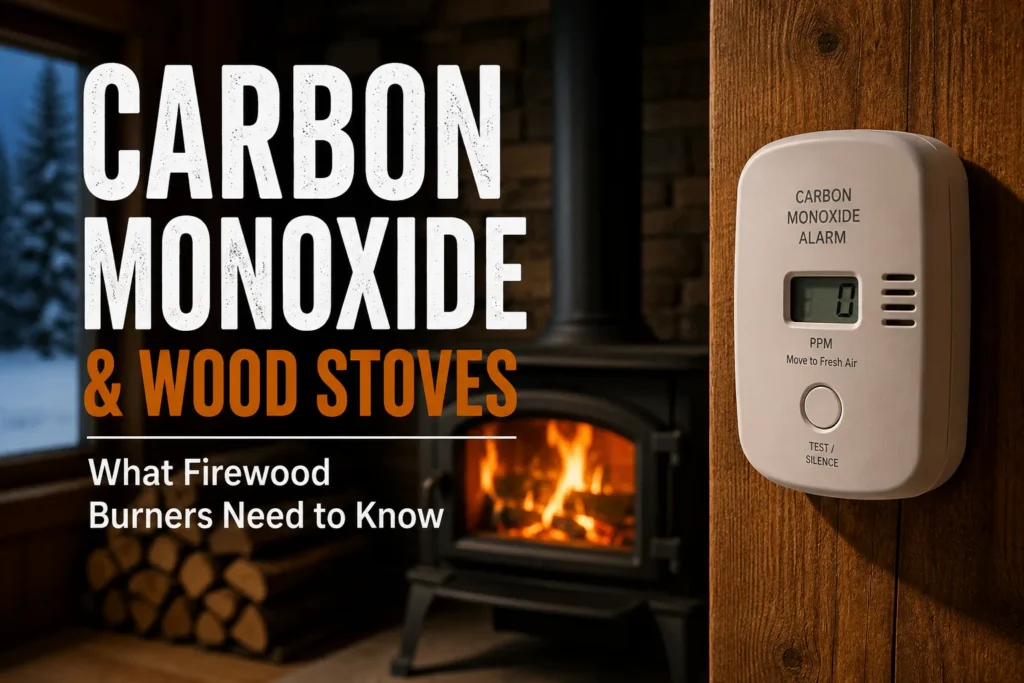
There are few things better on a cold Ontario evening than the heat from a wood stove or fireplace. For many homes and cottages around Collingwood, The Blue Mountains, Thornbury, Meaford and the surrounding area, wood heat is more than atmosphere — it is part of getting through winter.
But burning wood also comes with responsibilities.
One of the most important is protecting your home from carbon monoxide.
Carbon monoxide, often shortened to CO, is a colourless, odourless and tasteless gas. You cannot see it or smell it, which is why working carbon monoxide alarms are such an important part of any home that uses a wood stove, fireplace or other fuel-burning appliance.
Can a Wood Stove Cause Carbon Monoxide?
Yes.
Wood stoves, fireplaces and other wood-burning appliances can produce carbon monoxide. CO is created when fuel does not burn completely.
Under normal operating conditions, combustion gases should travel safely through the stove pipe, flue or chimney and leave the home. Problems can arise when combustion is poor or when those gases cannot vent properly.
Possible causes include:
- A blocked or restricted chimney
- Creosote or soot buildup
- Poor chimney draft
- Damaged or improperly installed venting
- A malfunctioning wood-burning appliance
- Insufficient combustion air
- Improper operation of the stove or fireplace
This is why a properly installed and maintained wood-burning system is just as important as the firewood you put into it.
Why Burning Firewood Can Produce Carbon Monoxide
Wood needs heat, oxygen and proper airflow to burn efficiently.
When combustion is incomplete, carbon monoxide can be produced along with smoke and other combustion gases.
Blocked Chimneys and Flues
Your chimney has an important job: carrying combustion gases safely outside.
Creosote, soot, debris, animal nests, ice or other obstructions can interfere with that process. A damaged or poorly maintained chimney can also prevent proper venting.
If gases cannot escape as intended, they may enter the living space instead.
Poorly Operating Wood Stoves and Fireplaces
A wood stove should be operated according to the manufacturer’s instructions.
Restricting the fire too aggressively, operating an appliance incorrectly or using a stove with damaged components can contribute to poor combustion.
If you notice unusual smoke entering the room, persistent draft problems or changes in how your stove burns, don’t simply assume the wood is having a bad day. Have the system inspected.
Improper Installation or Maintenance
Wood-burning appliances depend on the complete system working properly — stove, connections, chimney, flue and air supply.
Loose vent connections, damaged components or improper installation can create serious safety concerns.
Have wood-burning appliances and venting systems inspected and maintained by a qualified professional according to the manufacturer’s recommendations.
Ontario Carbon Monoxide Alarm Requirements
Ontario strengthened its carbon monoxide alarm requirements on January 1, 2026.
For a house that has a fuel-burning appliance, fireplace or attached garage — as well as certain homes receiving heated air from a fuel-burning appliance located outside the home — carbon monoxide alarms are required.
In qualifying Ontario houses, CO alarms must be installed:
- Adjacent to each sleeping area
- On every storey of the home, including storeys without sleeping areas
Always install carbon monoxide alarms according to the alarm manufacturer’s instructions.
Requirements can vary depending on the type of building and its configuration. Homeowners and landlords who are uncertain about their requirements should consult the Ontario Fire Code guidance or their local fire department.
Smoke Alarms and Carbon Monoxide Alarms Are Not the Same Thing
A smoke alarm and a carbon monoxide alarm detect different dangers.
A smoke alarm is designed to warn you about a fire.
A carbon monoxide alarm is designed to detect dangerous concentrations of CO.
One does not replace the other.
Combination smoke and carbon monoxide alarms are available, but the device still contains separate detection systems for the two hazards.
Homes using fireplaces, wood stoves and other combustion appliances should have the required working smoke and carbon monoxide alarms.
Symptoms of Carbon Monoxide Poisoning
Carbon monoxide poisoning can be difficult to recognize because early symptoms may resemble the flu or other common illnesses.
Symptoms of lower-level exposure can include:
- Headache
- Tiredness
- Shortness of breath
- Flu-like symptoms
- Muscle weakness
Higher levels of exposure can cause:
- Dizziness
- Chest pain
- Difficulty thinking clearly
- Vision problems
- Loss of consciousness
- Convulsions
- Coma
- Death
Never rely on symptoms to tell you whether carbon monoxide is present.
A working CO alarm is the way to detect dangerous carbon monoxide in your home.
What Should You Do if Your CO Alarm Sounds?
Treat a carbon monoxide alarm seriously.
If the alarm sounds:
- Get everyone out of the building immediately and move to fresh air.
- Do not stay inside trying to locate the source.
- Once outside, call 911, your local fire department or emergency services.
- Do not return to the building until the problem has been identified and corrected and it is safe to re-enter.
Never assume an alarm is simply malfunctioning because you cannot smell smoke or see anything unusual.
Carbon monoxide cannot be seen, smelled or tasted.
How to Reduce Carbon Monoxide Risk When Burning Firewood
A few good habits can make wood burning considerably safer.
Burn Properly Seasoned Firewood
Properly seasoned firewood burns more efficiently than wet or excessively green wood.
Wet wood requires more energy to boil off moisture before the wood can burn effectively. That generally means a cooler, smokier fire and additional deposits in the chimney.
If you’re unsure which type or size of firewood works best for your stove or fireplace, our Firewood Finder can help you choose based on how you burn.
Keep Your Chimney and Venting System Maintained
Have your chimney, flue and wood-burning appliance inspected regularly by a qualified professional.
Creosote buildup should not be ignored. Apart from affecting airflow, creosote is combustible and can contribute to chimney fires.
Health Canada recommends regular maintenance of fuel-burning appliances and annual chimney cleaning for wood-burning fireplaces.
Follow Your Appliance Manufacturer’s Instructions
Every wood stove and fireplace insert is different.
Follow the manufacturer’s instructions for:
- Starting and maintaining fires
- Air-control settings
- Recommended fuel
- Loading the firebox
- Clearances
- Maintenance
- Chimney and venting requirements
Avoid improvising modifications to your appliance or venting system.
Keep Exterior Vents Clear
Snow and ice are an obvious concern during an Ontario winter.
After heavy snowfall or freezing weather, check accessible exterior vents and air intakes to make sure they haven’t become blocked.
Never compromise safety to reach a chimney or vent. If inspection requires climbing or accessing a dangerous location, call a professional.
Choosing and Maintaining Carbon Monoxide Alarms
Use a carbon monoxide alarm approved for use in Canada and install it according to the manufacturer’s instructions.
Test alarms as directed by the manufacturer and pay attention to low-battery, malfunction and end-of-life warnings.
Carbon monoxide alarms do not last forever. Instead of assuming every alarm should be replaced after a fixed number of years, check the manufacturer’s replacement or end-of-life instructions for your particular model.
If you are buying a new alarm, models with digital displays can also provide additional information about detected CO levels.
A Simple Wood-Burning Safety Checklist
Before settling in beside the fire this winter, make sure you can answer yes to these questions:
- Do we have working smoke alarms?
- Do we have CO alarms in the locations required for our home?
- Have the alarms been tested according to their instructions?
- Is our wood stove or fireplace in good working condition?
- Is the chimney and venting system clear and properly maintained?
- Are we burning appropriate, properly seasoned firewood?
- Does everyone in the house know what to do if the CO alarm sounds?
It doesn’t take long to check, and it is considerably easier than dealing with a preventable emergency.
Safe Wood Heat Starts With Good Habits
Wood heat remains a practical and enjoyable part of winter for many homeowners and cottage owners throughout Collingwood, The Blue Mountains, Thornbury, Meaford, Wasaga Beach, Stayner and the surrounding communities.
A safe fire starts with more than good firewood.
Properly seasoned wood, a well-maintained appliance, a clear chimney and working smoke and carbon monoxide alarms all work together.
Enjoy the warmth — just make sure the only thing sneaking up on you beside the fire is whoever wants the best chair.
Sources and Further Reading
For current carbon monoxide safety information and Ontario requirements, consult the Government of Ontario’s Carbon Monoxide Safety guidance and Health Canada’s carbon monoxide information.
Originally published: September 17, 2025
Updated: August 2026